Henri Matisse (1869–1954) was one of the most influential artists of the 20th century, a French master renowned for his bold use of color, fluid lines, and joyful celebration of life.
He first gained fame as a leader of Fauvism around 1905–1910, a short but explosive movement where he and fellow artists used wild, non-naturalistic colors and simplified forms to evoke emotion over realism, earning the nickname “wild beasts” (fauves). This early focus on pure, vibrant color as the main expressive tool laid the foundation for his entire career. Decades later, after major surgery in 1941 left him often bedridden or in a wheelchair,
Matisse reinvented his practice with cut-outs (gouaches découpées), turning physical limitation into one of his most innovative and exuberant periods. The cut-outs represent the triumphant culmination of his lifelong pursuit: uniting color and line directly, “drawing with scissors” to achieve the same joyful, harmonious intensity he explored in his Fauvist youth.
The Cut-Out Technique
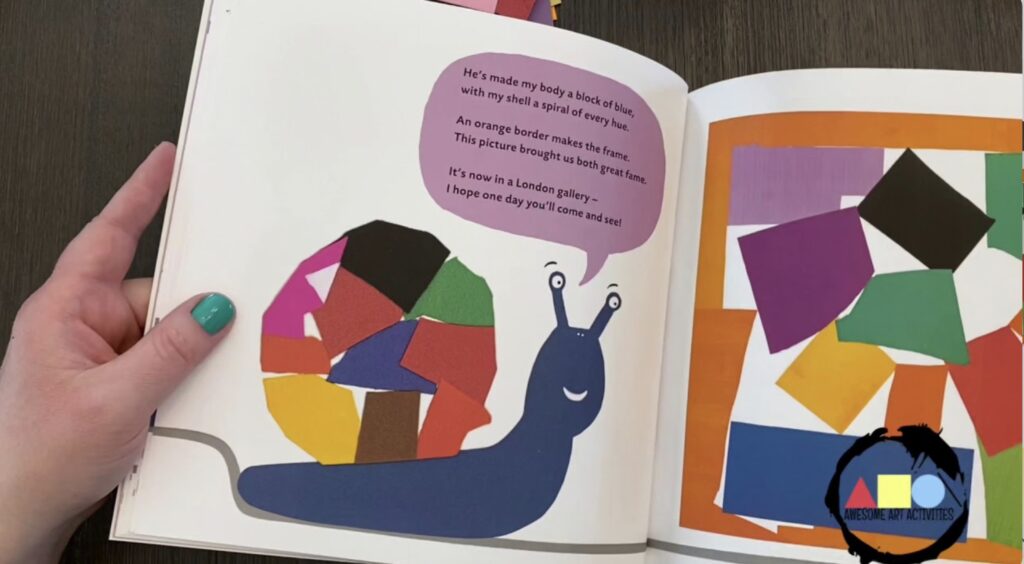
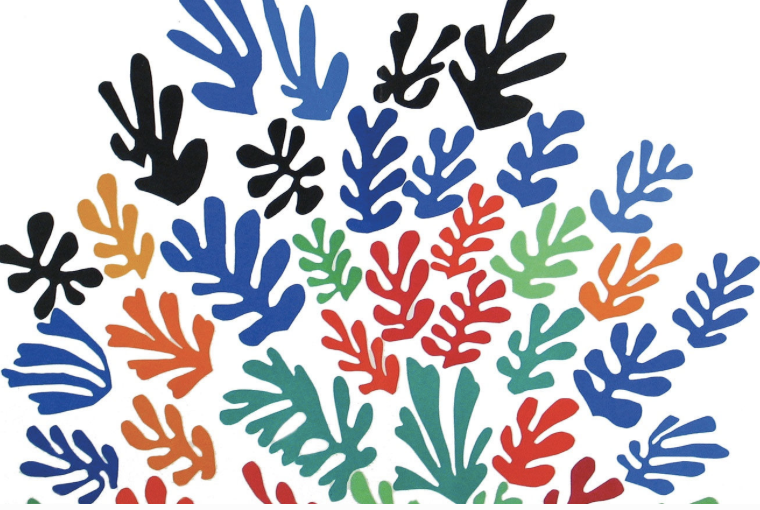
Matisse’s assistants painted large sheets of paper with gouache in pure, vibrant colors of his choosing. Once dry, he used large scissors to cut shapes directly from these sheets, freehand, without preliminary drawings in many cases. He described this as “drawing with scissors,” where the act of cutting into color felt immediate and sculptural. The cut shapes were then pinned (and later glued) onto a background, arranged and rearranged until the composition felt alive and balanced.
This process blended painting, drawing, and collage. It emphasized flat color fields, bold contrasts, organic curves, and simplified forms, echoing his lifelong pursuit of harmony through color rather than realistic depiction. The cut-outs ranged from small, intimate pieces to massive murals that transformed entire rooms.
Why the Cut-Outs Matter
The cut-outs allowed Matisse to escape illness’s constraints and rediscover creative freedom, building directly on his Fauvist roots by emphasizing flat, intense color fields and simplified shapes, now in pure, unmediated form.
The cut-outs represent a triumphant “second life” for Matisse. They allowed him to escape the constraints of illness and rediscover creative freedom. As he said, the technique let him “carve into color” directly, uniting line and color in a pure, direct way. These works influenced later movements in abstract art, design, and even installation art, showing how limitation can spark profound innovation.
Wouldn’t you love to try this art form? (read more)