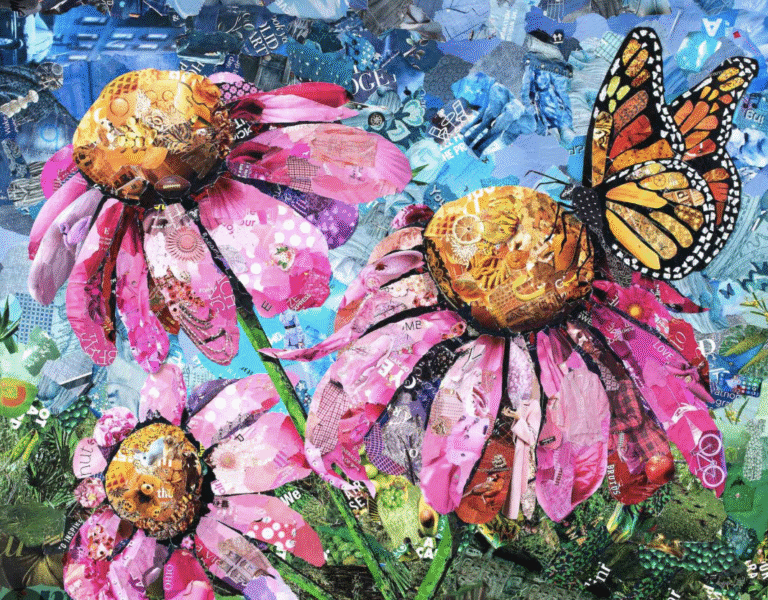
Collage is one of the most liberating and democratic art forms—transforming everyday scraps, images, and materials into something entirely new through cutting, tearing, layering, and gluing. Since its modern breakthrough in the early 20th century, artists have invented countless techniques, each bringing unique textures, narratives, and critiques to the table.
Here are several key collage techniques, with descriptions of how they work and a few notable artists who mastered or innovated them.
1. Papier Collé (Pasted Paper)
This foundational technique involves gluing cut or torn pieces of paper (often printed, decorated, or colored) onto a surface like canvas or board to form a composition. It emphasizes flat, two-dimensional assembly, blending drawing/painting with pasted elements.
- Pablo Picasso: Co-inventor of the method (with Georges Braque) during Cubism. His 1912 Still Life with Chair Caning incorporated oilcloth mimicking chair caning and rope, challenging traditional illusionism.
- Georges Braque: Pioneered it alongside Picasso, using newspaper fragments and wallpaper to integrate real-world textures into synthetic Cubist works.
- Juan Gris: Refined the technique with precise, architectural compositions like Breakfast (1914), using bold shapes and limited palettes.
2. Photomontage
Photomontage assembles cut photographs (or photo reproductions) to create surreal, narrative, or satirical images, often seamless composites that critique society, politics, or perception.
- Hannah Höch: Dada pioneer; her iconic Cut with the Dada Kitchen Knife… (1919) used magazine clippings, photos, and text for biting commentary on Weimar Germany gender and politics.
- John Heartfield: Master of political photomontage in the 1930s, creating anti-Nazi propaganda by juxtaposing powerful images (e.g., Hitler as puppet-master).
- Wangechi Mutu: Contemporary Kenyan-American artist blending fashion, anatomy, and cultural imagery in surreal photomontages that explore feminism, colonialism, and identity.
3. Assemblage / Merz (Found-Object Collage)
Extends collage into three dimensions by combining found objects, ephemera, trash, or non-paper materials (wood, fabric, metal) into sculptural or relief works—often chaotic or poetic.
- Kurt Schwitters: Inventor of “Merz” (a term for combining any materials artistically). His Merz pictures and assemblages used ticket stubs, wood scraps, and urban debris for abstract, harmonious chaos.
- Robert Rauschenberg: Combined photographs, newspapers, fabrics, and paint in “Combines” (1950s–60s), blurring painting, sculpture, and collage.
- Romare Bearden: Used magazine clippings, fabrics, and painted papers in powerful depictions of African American life, drawing from quilting traditions and jazz rhythms (e.g., Patchwork Quilt).
4. Cut-Outs (Paper Cut-Out Collage)
Artists cut colored paper shapes freehand and arrange them directly, often large-scale, vibrant, and painterly, replacing brushwork entirely.
- Henri Matisse: In his late career (1940s), health limited him to scissors; he created joyful, large-scale cut-outs like those in Jazz book, treating paper as pure color and form.
- Eileen Agar: Surrealist who layered cut paper, parchment, and marbling with classical motifs for poetic, dreamlike abstractions.
5. Découpage
A decorative technique of layering cut paper images (often from prints, napkins, or magazines) and sealing them with varnish or medium for a smooth, embedded finish, commonly used on objects (furniture, trays) but also flat works.
- Mary Delany: 18th-century “paper mosaicks” of botanical specimens, hand-cutting tiny colored papers for lifelike flower portraits (precursor to modern découpage).
- Contemporary practitioners like Mandy Pattullo or Barbara Shaw. Use vintage fabrics, recycled papers, and stitching in textile-influenced découpage-style collages.
6. Décollage (Reverse Collage / Tearing Away)
The opposite of collage: starting with layered posters or papers and ripping/tearing away sections to reveal underlying layers, often creating abstract or protest works from street posters.
- Mimmo Rotella: Nouveau Réalisme artist famous for “double décollages” from ripped movie/ad posters, leaving weathered, layered surfaces as commentary on consumer culture.
- Jacques Villeglé : Fellow affichiste who tore urban posters to expose strata of time and advertising.
7. Digital / Hybrid Collage
Modern twist using software (Photoshop, Procreate) for seamless composites, then printing or combining with physical elements—blending analog and digital.
- John Stezaker: Conceptual artist creating surreal photo juxtapositions (e.g., film stills with postcards) through precise cutting and minimal intervention.
- Martha Rosler: Feminist photomontages critiquing war and consumerism, often hybrid with text and appropriated images.
Collage thrives on experimentation, no rules, just intuition and found beauty. Whether you’re tearing magazine pages in your studio or layering digital scraps, these techniques invite endless play.
Which one resonates most with your own work, or inspires your next piece? I’d love to hear!

