
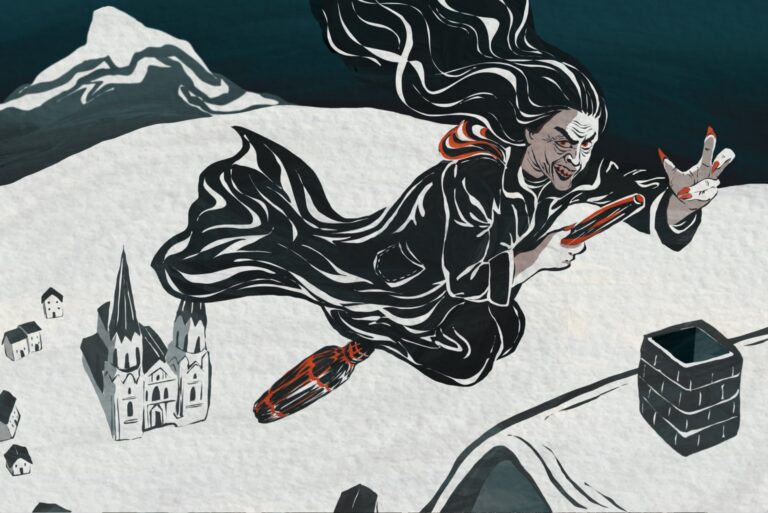
The Chilling (and Delicious) Legend of Frau Perchta.
Alpine Goddess, Belly-Slitter, and the Surprising Reason We Eat Oliebollen on New Year’s Eve
As the holidays approach and I’m prepping my deep fryer for a batch of oliebollen (those irresistible Dutch deep-fried dough balls), I stumbled down a folklore rabbit hole that’s equal parts magical, terrifying, and oddly comforting. It all ties back to an ancient Alpine figure named Frau Perchta, a winter goddess who’s both benevolent beauty and nightmarish crone.
And yes, there’s a quirky Dutch twist involving greasy treats saving your life.
Who Is Frau Perchta?
Perchta (also called Berchta, Percht, or Frau Perchta) hails from pre-Christian Germanic and Alpine folklore, with roots in regions like Bavaria (southern Germany), Austria, Switzerland, and Slovenia. Her name likely comes from an Old High German (hoch Deutsch) word meaning “bright” or “shining,” hinting at her original role as a luminous spirit of light and renewal during the dark winter months.
But Perchta is no one-note character. She’s famously dual-natured, appearing in two starkly different forms:
Lorem ipsum dolor sit amet, consectetur adipiscing elit. Ut elit tellus, luctus nec ullamcorper mattis, pulvinar dapibus leo.

The beautiful Perchta
A radiant young woman in flowing white robes, symbolizing purity, fertility, and generosity.
The terrifying Perchta
An old, haggard hag with wild hair, ragged clothes, and sometimes an iron nose or a hidden knife under her skirts.
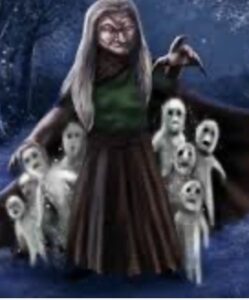
She roams during the “Twelve Nights” (roughly December 25 to January 6, the period between Christmas and Epiphany), acting as a guardian of moral order. Think of her as a midwinter judge:
- Rewards for the diligent: If you’ve been hardworking (especially with spinning and weaving her sacred domain), obedient, and respectful of traditions, she might leave silver coins in your shoes or bring prosperity.
- Punishments for the lazy or rule-breakers: Slack off on chores, spin thread during the holiday “rest” period, or forget certain rituals? Perchta could slit open your belly, remove your insides, and stuff you with straw, garbage, or pebbles. (Yes, really—she’s earned nicknames like “Belly-Slitter” in the grimmer tales.)
She’s also linked to fertility, the souls of unbaptized children, and even teaching humans practical skills like making linen. Some folklore scholars connect her to figures like Frau Holle (from the Brothers Grimm) or ancient goddesses like Frigg or Holda.
Perchten Parades: Bringing the Myth to Life
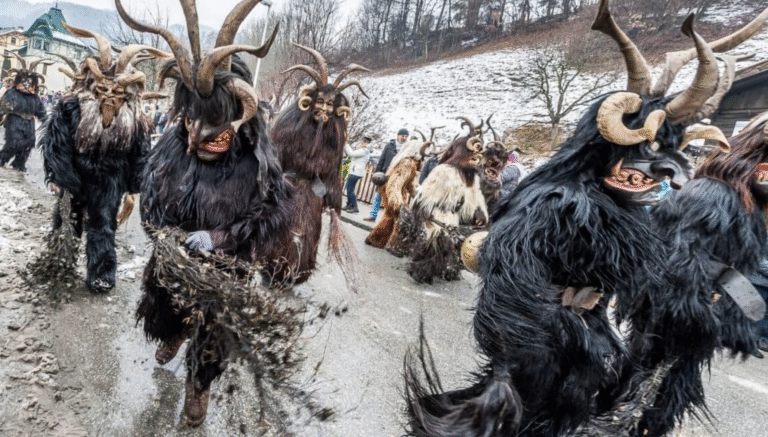
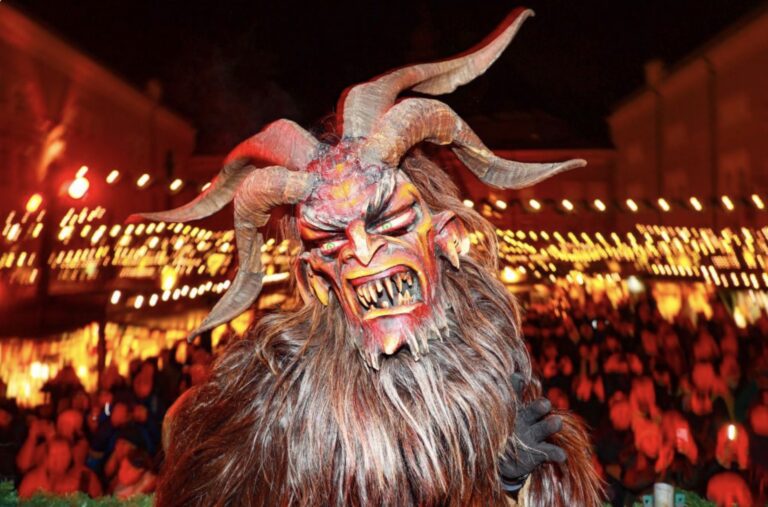
Today, Perchta lives on in spectacular Alpine festivals called Perchten runs or parades, especially in Austria and Bavaria. Groups of masked performers—called Perchten—march through towns, scaring away winter evils and bringing luck.
There are two types:
- Schöne Perchten (beautiful ones): Elaborate, bell-ringing figures in white, promoting good fortune.
- Schlechte Perchten (ugly ones): Furry, horned, Krampus-like monsters that rattle chains and chase spectators.
The Dutch Oliebollen Connection: Grease as Protection?
Now for the fun (and tasty) part. While Perchta’s core myths are Alpine, a delightful legend migrated northward to the Netherlands, explaining the New Year’s tradition of eating oliebollen.
According to the tale, during those same Twelve Nights, Perchta and her band of spirits would fly across the sky, hungry and vengeful. If they spotted a lazy or unprepared household, Perchta might swoop down with her sword to … well, perform her signature belly-slitting move and feast on the contents.
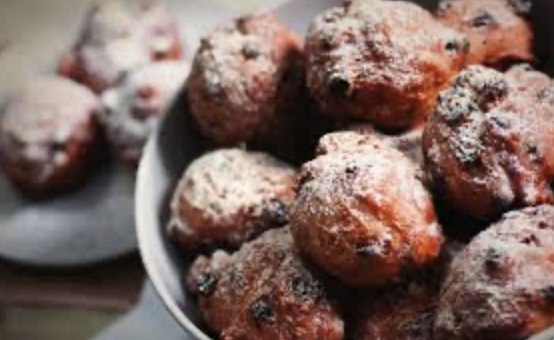
Here’s the clever workaround:
If you’d gorged on greasy, deep-fried oliebollen, the fat would coat your insides.
When Perchta tried to slash you, her blade would slip harmlessly off your slippery belly, saving your life!

